The Quintessential Lasagne: Crafting Italy’s Timeless Comfort Masterpiece
Jump to RecipeThe Story Behind
The lineage of lasagne stretches back further than many imagine, with ancient Roman roots hinting at layered dishes. The word “lasanum” itself referred to a cooking pot, not the dish, suggesting an evolution from pan to food. However, the lasagne we recognize today firmly establishes its heritage in medieval Italy, particularly in Bologna and Naples. Early versions often featured different fillings, with tomatoes becoming a staple only after their introduction from the Americas and their widespread culinary acceptance in the 17th-18th centuries.
While many regions claim their own authentic take, Lasagne al Forno (baked lasagne) with ragù, béchamel, and Parmesan became iconic in Emilia-Romagna, specifically Bologna. Naples, on the other hand, often includes ricotta, meatballs, and hard-boiled eggs in its festive Carnevale lasagne. The dish’s global journey began with Italian emigration, carrying this beloved comfort food across continents, adapting to local ingredients but always retaining its soulful essence—a symbol of family, gathering, and the enduring warmth of Italian hospitality.
Why This Recipe Works
Beef (Ragu): The heart of the lasagne. Using a blend of lean and fatty ground beef (e.g., 80/20 chuck) is crucial. The fat renders, carrying flavor compounds, while the protein undergoes the Maillard reaction upon searing. This complex chemical cascade between amino acids and reducing sugars creates hundreds of new flavor molecules (pyrazines, thiophenes, etc.), resulting in the rich, savory, umami notes that define a good ragù. Slow simmering then breaks down tough connective tissues into gelatin, adding a luxurious mouthfeel.
Tomatoes: Beyond their vibrant acidity, tomatoes contribute depth. Glutamates present in tomatoes enhance umami, especially when cooked down. The acidity balances the richness of the beef and béchamel, preventing the dish from becoming cloying. Lycopene, a potent antioxidant, is also more bioavailable after cooking. San Marzano tomatoes are prized for their balanced sweetness and low acidity.
Pasta Sheets: The vehicle for flavor and structure. Traditional lasagne sheets are made from durum wheat semolina and water (sometimes eggs), providing a high gluten content for elasticity and chew. When cooked, the starch granules absorb water, swell, and gelatinize, becoming tender yet firm enough to hold their shape. The rough surface of fresh or artisanal dried pasta helps bind the sauces.
Béchamel Sauce: A classical French mother sauce that acts as the creamy binder. It’s an emulsion of butter, flour (roux), and milk. The roux’s cooked starch prevents the sauce from separating and contributes a nutty flavor. The milk, primarily water, fat, and casein proteins, becomes thickened and luxurious, providing a counterpoint of dairy sweetness and unctuousness to the savory ragù and sharp cheese.
Parmesan/Mozzarella: The cheese provides both flavor and texture. Parmesan (Parmigiano-Reggiano) offers sharp, salty, umami notes from its aged casein proteins and lactic acid. Mozzarella, especially fresh low-moisture variants, contributes melt, stretch, and a mild milky flavor. The fat in the cheese emulsifies into the sauce layers during baking, creating an irresistible golden crust and creamy interior.
Instructions
The Heart of the Matter: Developing the Ragu
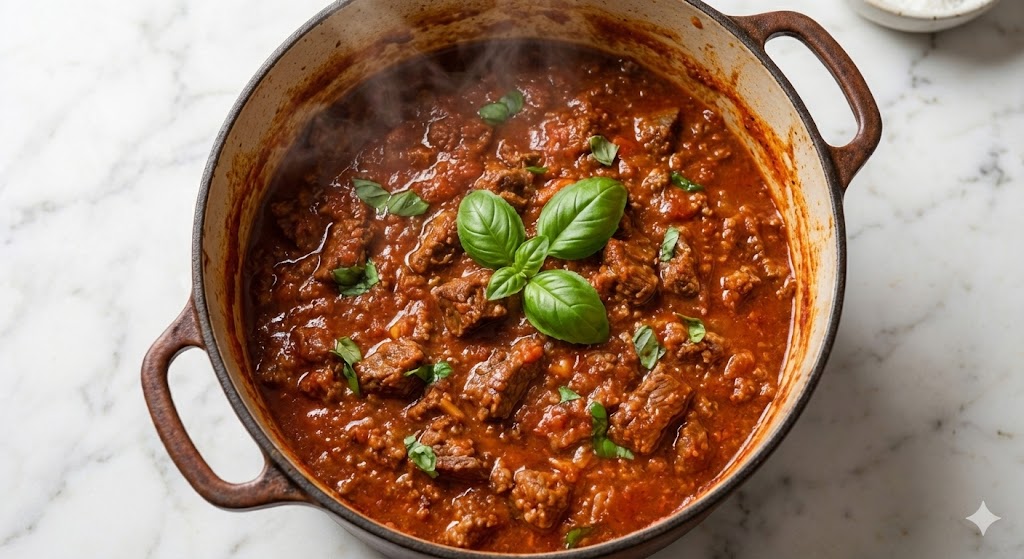
Begin by browning ground beef deeply in olive oil, ensuring a rich Maillard reaction. Drain excess fat. Sauté finely diced soffritto (onion, carrot, celery) until tender. Deglaze with red wine, scraping up all the fond. Stir in high-quality crushed tomatoes, a splash of beef stock, and seasonings. Simmer gently for at least 2-3 hours, allowing flavors to meld and deepen, stirring occasionally.
The Velvety Embrace: Mastering the Béchamel
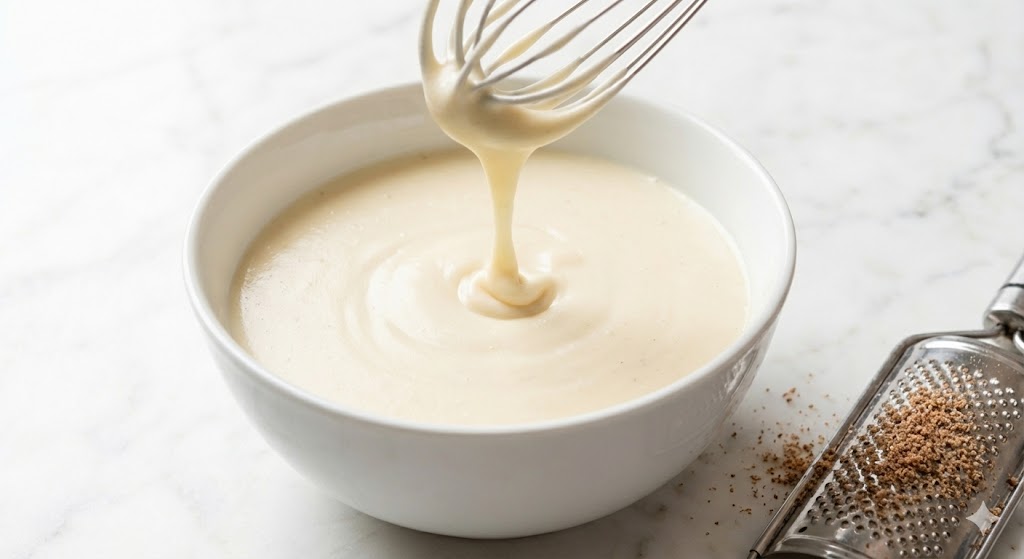
In a separate saucepan, melt unsalted butter over medium heat. Whisk in all-purpose flour to create a pale roux, cooking for 1-2 minutes until fragrant but not browned. Gradually whisk in warm milk, ensuring no lumps form, until the sauce thickens to a pourable, creamy consistency. Season with salt, white pepper, and a pinch of nutmeg. Keep warm, covered, to prevent a skin from forming.
Architectural Harmony: Assembling the Lasagne
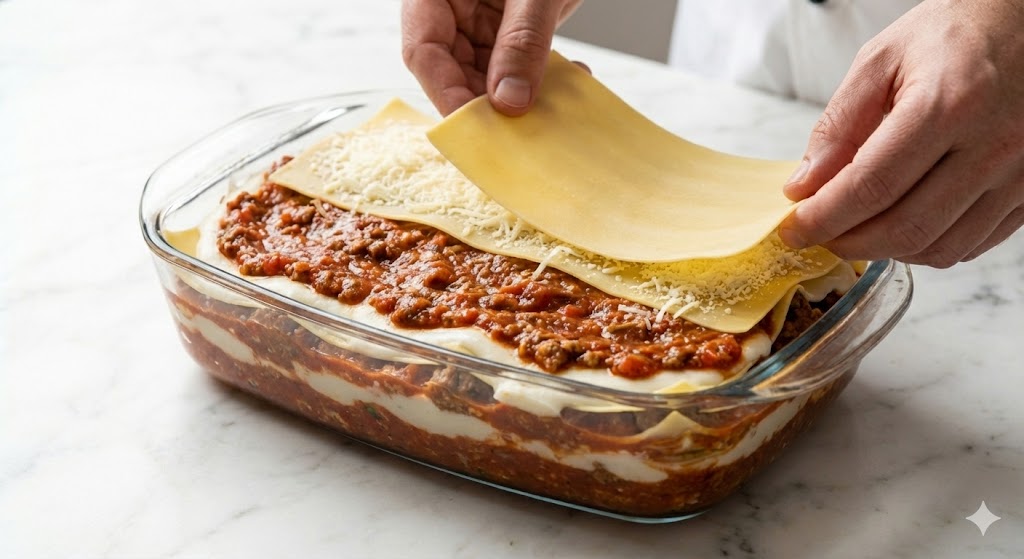
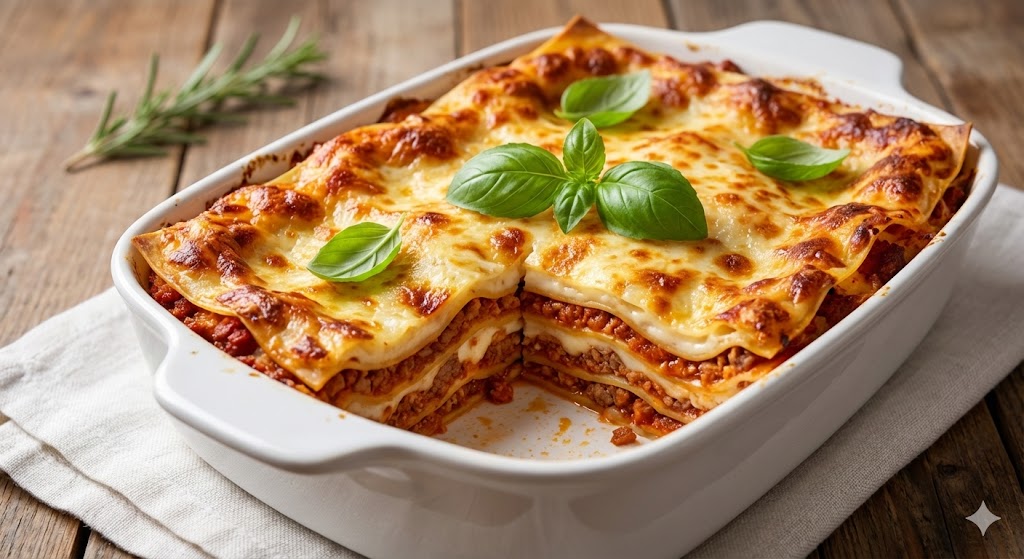
Lightly grease a deep baking dish. Spread a thin layer of ragù at the bottom. Top with a single layer of pasta sheets (no-boil or pre-boiled to al dente). Follow with a generous spread of béchamel, then a sprinkling of grated Parmesan and shredded mozzarella. Repeat layers: ragù, pasta, béchamel, cheeses, ensuring each layer is even. Finish with a final layer of pasta, a thick spread of béchamel, and a generous covering of both cheeses.
The Grand Finale: Baking to Golden Perfection
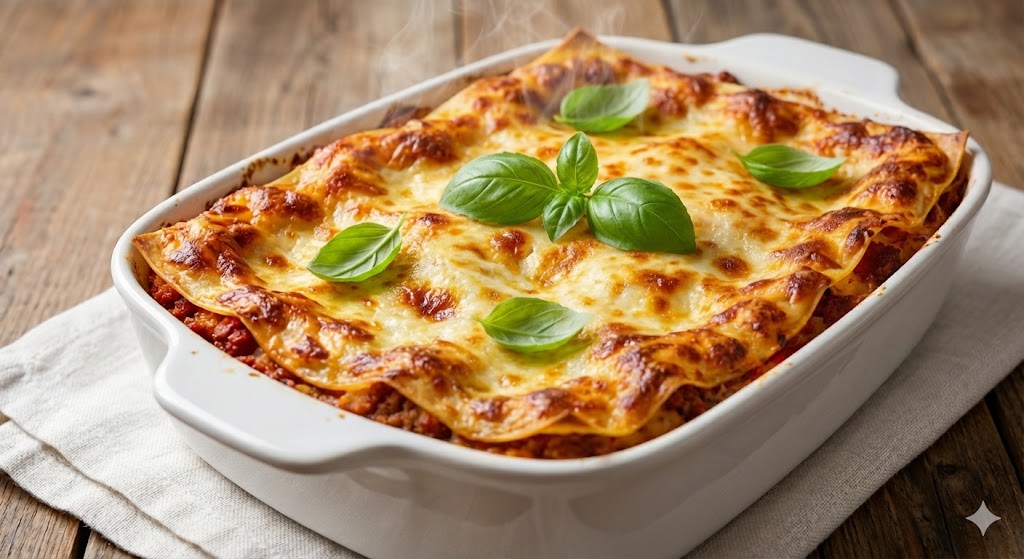
Cover the baking dish loosely with foil and bake in a preheated oven (around 375°F / 190°C) for 25-30 minutes. Remove the foil and continue baking for another 15-20 minutes, or until the top is bubbling, golden brown, and beautifully caramelized. Let the lasagne rest for at least 15-20 minutes after baking before slicing; this allows the layers to set and prevents collapse.
Chef’s Tips
- Slow and Low Ragu: The longer you simmer your ragù, the deeper and more complex its flavor will become. Aim for at least 2-3 hours, or even longer on a very low heat.
- No-Boil vs. Fresh Pasta: While no-boil sheets are convenient, fresh pasta offers a superior texture. If using fresh, ensure it’s slightly al dente before layering to prevent overcooking.
- Resting is Crucial: Always let your baked lasagne rest for 15-20 minutes before slicing. This allows the sauces to set, preventing a messy, collapsed slice.
- Nutmeg in Béchamel: A tiny pinch of freshly grated nutmeg elevates the béchamel, adding a subtle warmth and sophistication.
- Quality Ingredients: Use high-quality San Marzano tomatoes, fresh Parmigiano-Reggiano, and good ground beef. The better the raw ingredients, the better the final dish.
Frequently Asked Questions
The Quintessential Lasagne: Crafting Italy’s Timeless Comfort Masterpiece
Ingredients
- For the Ragu:
- 2 tbsp olive oil
- 1.5 lbs ground beef (80/20 chuck)
- 1 large onion, finely diced
- 2 carrots, finely diced
- 2 celery stalks, finely diced
- 4 cloves garlic, minced
- ½ cup dry red wine
- 28 oz can crushed San Marzano tomatoes
- 1 cup beef broth
- 2 bay leaves
- Salt and freshly ground black pepper to taste
- For the Béchamel:
- ½ cup (1 stick) unsalted butter
- ½ cup all-purpose flour
- 4 cups whole milk, warmed
- Salt and white pepper to taste
- Pinch of freshly grated nutmeg
- For Assembly:
- 12-16 no-boil lasagne sheets (or fresh pasta)
- 1.5 cups freshly grated Parmigiano-Reggiano cheese
- 2 cups shredded low-moisture mozzarella cheese
- Fresh basil for garnish