The Art of the Perfect Crust: A Gourmet Journey into Pizza Perfection
Jump to RecipeThe Story Behind
The story of pizza stretches back millennia, far beyond the bustling pizzerias of Naples. Ancient Egyptians, Greeks, and Romans all enjoyed various forms of flatbreads, often topped with olive oil, herbs, and cheese. These rustic precursors served as both a staple food and a convenient plate, laying the groundwork for what would become one of the world’s most iconic dishes. The true ‘pizza’ began to take shape in southern Italy, particularly in Naples, where street vendors sold simple, sauced flatbreads to the working class.
The pivotal moment arrived in 1889 when Queen Margherita of Savoy visited Naples. Legend has it, she grew tired of the elaborate French cuisine and asked for a selection of local specialties. Raffaele Esposito, a renowned pizzaiolo, created three different pizzas, one of which featured tomatoes (red), mozzarella (white), and basil (green) – representing the colours of the Italian flag. The Queen was delighted, and thus, the ‘Pizza Margherita’ was born, cementing pizza’s place in culinary history and elevating it from a peasant’s meal to a dish fit for royalty. From then on, pizza’s journey across the globe began, evolving and adapting, yet always holding true to its Neapolitan heart.
Why This Recipe Works
The magic of pizza lies in the meticulous interplay of its core components. Flour, the backbone, is ideally Type ’00’ – a finely milled Italian flour with a specific protein content that allows for excellent gluten development without being overly elastic, resulting in a soft, airy crust with characteristic chew. The gluten network, formed when flour’s proteins (glutenin and gliadin) hydrate and are kneaded, traps the gases produced by yeast, creating the signature alveoli (air pockets) in the dough.
Water isn’t just a diluent; its quality and temperature are crucial for yeast activation and optimal dough hydration. A higher hydration dough (typically 60-70% water to flour ratio) yields a more tender, open crumb. Yeast, the living leavening agent, metabolizes sugars in the flour, producing carbon dioxide gas (for rise) and a host of aromatic compounds that contribute to the dough’s complex flavor profile. Salt is a flavor enhancer, but also a crucial regulator, slowing down yeast activity to allow for a longer, more controlled fermentation, which deepens flavor. For the topping, San Marzano tomatoes offer a perfect balance of sweetness and acidity with low seed count, their robust flavor intensified by high heat. Finally, fresh mozzarella, ideally Fior di Latte or buffalo mozzarella, melts into a creamy, luscious blanket. Its high moisture content contributes to a soft texture, while its milk solids brown beautifully, providing both visual appeal and a rich, savory counterpoint to the vibrant tomato.
Instructions
Mastering the Dough: The Foundation of Flavor
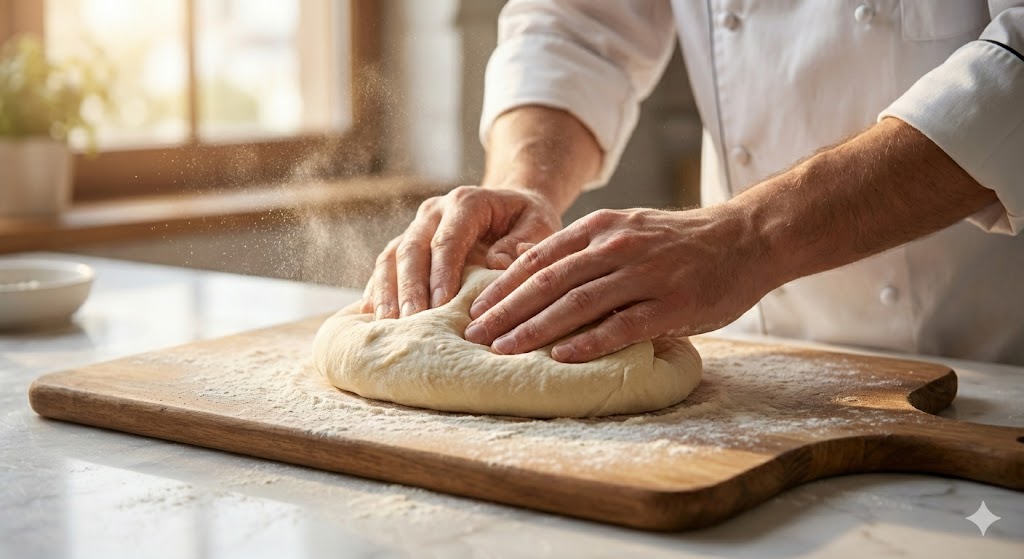
In a large bowl, combine the ’00’ flour and salt. In a separate bowl, whisk together warm water and active dry yeast, letting it bloom for 5 minutes until foamy. Pour the yeast mixture into the flour, stirring with a wooden spoon until a shaggy dough forms. Turn the dough out onto a lightly floured surface and knead for 10-15 minutes until smooth and elastic. Alternatively, use a stand mixer with a dough hook for 8-10 minutes. Form into a ball, lightly oil the bowl, cover with plastic wrap, and let rise in a warm place for 1.5-2 hours, or until doubled in size. For a more developed flavor, cold ferment in the refrigerator for 24-48 hours.
Crafting the Neapolitan Sauce & Assembly
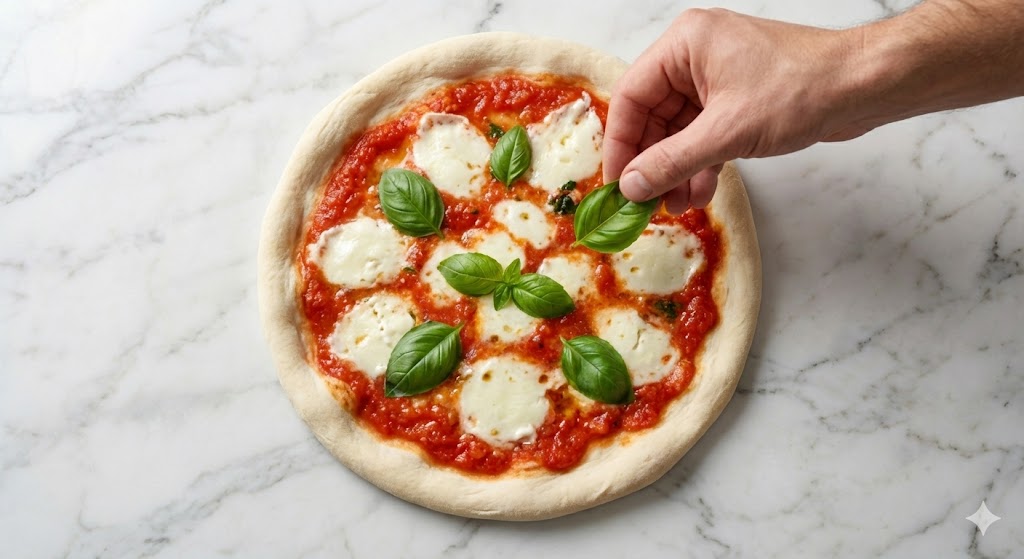
Drain a can of whole San Marzano tomatoes, gently crush them by hand or with a fork in a bowl. Season simply with a pinch of sea salt and a drizzle of high-quality extra virgin olive oil – no cooking required, allowing the fresh tomato flavor to shine. Once your dough has risen, gently divide it into 2-3 equal portions. On a lightly floured surface, carefully stretch each dough ball from the center outwards, using your fingertips to create an even disc with a slightly thicker edge for the crust. Avoid using a rolling pin, which can deflate the air. Spoon 2-3 tablespoons of sauce onto the center, spreading it evenly but leaving a 1/2 inch border. Tear fresh mozzarella into small pieces and scatter over the sauce. Finish with a few fresh basil leaves.
The High-Heat Bake: Achieving the Perfect Char
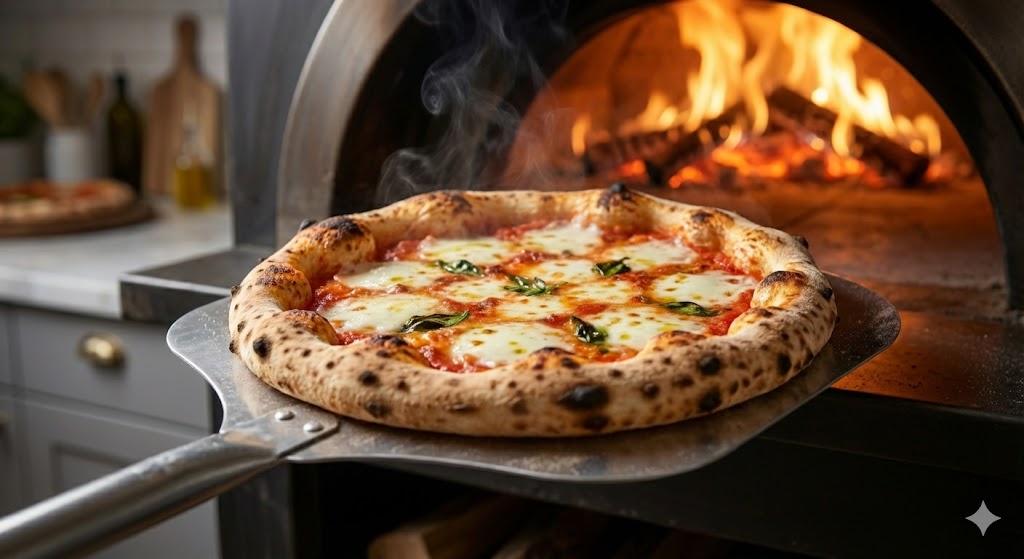
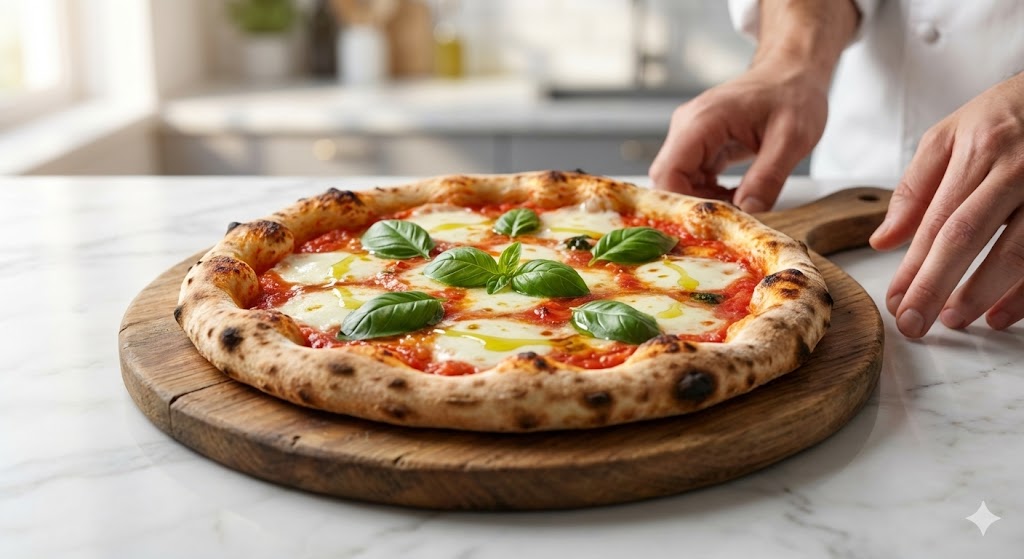
Preheat your oven with a pizza stone or steel to its highest possible temperature (typically 500-550°F / 260-290°C) for at least 45 minutes to an hour. This extreme heat is crucial for a crisp base and a quick, puffy crust. Carefully transfer the assembled pizza onto a lightly floured or semolina-dusted pizza peel. Slide the pizza onto the preheated stone/steel in the oven. Bake for 6-10 minutes, rotating halfway through if needed, until the crust is golden brown and blistered, and the cheese is bubbly and slightly caramelized. Remove from the oven, drizzle with a final touch of extra virgin olive oil, and garnish with additional fresh basil.
Chef’s Tips
- Use Cold Fermentation: For unparalleled flavor development and easier handling, prepare your dough 24-48 hours in advance and let it proof slowly in the refrigerator.
- High Heat is Key: Invest in a pizza stone or steel and preheat your oven to its maximum temperature for at least 45 minutes to achieve that coveted crispy crust and rapid bake.
- Don’t Overload Toppings: A truly great pizza lets each ingredient shine. Keep toppings sparse and high-quality to avoid a soggy crust and ensure even cooking.
- Stretch, Don’t Roll: Gently stretch your dough by hand from the center outwards. A rolling pin pushes out the gases, compromising the airy texture of the crust.
- Quality Ingredients Matter: From ’00’ flour to San Marzano tomatoes and fresh mozzarella, the quality of each component directly impacts the final taste and texture of your pizza.
Frequently Asked Questions
Authentic Neapolitan pizza adheres to strict standards set by the Associazione Verace Pizza Napoletana (AVPN). Key elements include ’00’ flour, San Marzano tomatoes, fresh mozzarella (Fior di Latte or Buffalo), fresh basil, salt, and yeast. It must be hand-stretched, cooked in a wood-fired oven at 900°F (485°C) for 60-90 seconds, resulting in a soft, airy, and slightly chewy crust with characteristic ‘leopard spots’ (charred blisters).
Absolutely, and it’s highly recommended! Making pizza dough 1-3 days in advance and allowing it to cold ferment in the refrigerator significantly enhances its flavor and texture. The slow fermentation process develops more complex sugars and acids, leading to a richer taste and better digestibility. Just remember to bring the dough to room temperature for about an hour before stretching.
The Art of the Perfect Crust: A Gourmet Journey into Pizza Perfection
Ingredients
- 250g '00' flour (plus extra for dusting)
- 175ml warm water (about 105°F / 40°C)
- 3g active dry yeast (about 1 tsp)
- 5g fine sea salt (about 1 tsp)
- 1 (400g) can San Marzano tomatoes, whole peeled
- 150g fresh mozzarella (Fior di Latte or Buffalo), drained and torn
- Small handful fresh basil leaves
- 2 tbsp extra virgin olive oil, plus more for drizzling